
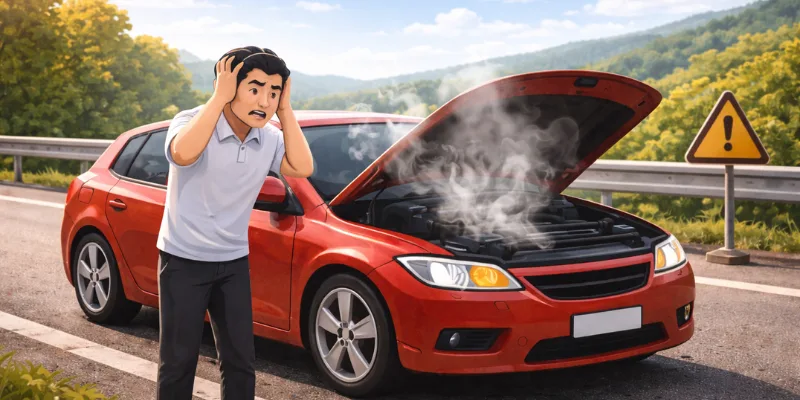
5 Things You Should Never Do When Your Car Overheats
Few dashboard lights trigger panic faster than the temperature warning. One moment you’re driving normally, and the next, the car feels sluggish, steam may appear, and your mind jumps straight to expensive repairs.
When a car overheats, what you do in the next few minutes matters more than what caused the problem. Many drivers unintentionally turn a manageable issue into a major engine failure simply by reacting the wrong way.
This guide focuses on the five things you should never do when your car overheats, explained in a way that’s practical, slightly eye-opening, and genuinely useful—especially for Indian driving conditions.
Understanding Car Overheating
Car overheating happens when the engine temperature rises beyond safe operating limits. This usually occurs because heat is not being removed efficiently from the engine.
Common reasons include low coolant, radiator leaks, cooling fan failure, clogged hoses, extreme weather, or heavy traffic conditions. In electric vehicles, overheating can occur in battery systems or power electronics, though the symptoms are handled differently.
Overheating is not always catastrophic—but poor reactions can make it so.
Why Knowing What Not to Do Is More Important Than Fixing It
When drivers panic, they act fast—but not always smart. Modern engines are precise systems. A single wrong move during overheating can warp engine components, crack cylinder heads, or cause long-term internal damage.
Avoiding the wrong actions:
- Saves you from costly engine repairs
- Protects you from burns and injuries
- Prevents sudden breakdowns in dangerous locations
In short, restraint is as important as action.
The Heat Reaction Timeline (What’s Happening Under the Bonnet)
As engine temperature rises, metal components expand. Coolant pressure increases. Rubber hoses soften. If the system is stressed further, seals fail, fluids escape, and internal components can deform.
This is why timing—and patience—are critical during an overheating incident.
The 5 Things You Should Never Do When Your Car Overheats by TowMe
1. Never Keep Driving “Just a Little More”
This is the most common and costly mistake.
Drivers often think they can reach the next exit, fuel station, or home if they drive gently. In reality, every extra minute of driving with an overheated engine increases internal stress dramatically.
Even a short distance can turn a simple coolant issue into permanent engine damage. Once the temperature warning appears or steam is visible, continuing to drive is a gamble you usually lose.
2. Never Open the Bonnet Immediately
The instinct to “check what’s wrong” is understandable—but dangerous.
When a car overheats, the cooling system is under high pressure. Opening the bonnet too quickly can expose you to scalding steam or boiling coolant. Serious burns often happen this way.
The correct approach is to switch off the engine, move to a safe spot, and wait at least 15–30 minutes before opening the bonnet carefully.
3. Never Pour Cold Water on a Hot Engine
This myth refuses to die.
Pouring cold water on a hot engine or radiator causes sudden temperature shock. Metal components contract rapidly, increasing the risk of cracks in the engine block or cylinder head.
If coolant needs to be added, it should only be done after the engine has cooled significantly—and preferably by a professional.
4. Never Ignore Warning Signs Before the Breakdown
Overheating rarely happens without early warnings. Temperature gauges rising, warning lights flickering, reduced AC performance, or a burning smell are all signals that something isn’t right.
Many drivers dismiss these signs as “temporary” or “normal in traffic,” especially during summer. Ignoring early warnings almost always leads to a roadside breakdown later.
5. Never Assume Overheating Is a One-Time Issue
Some drivers cool the car down, drive away, and forget about it entirely. This is a mistake.
Overheating is usually a symptom, not the root problem. A leaking hose, failing radiator fan, or low coolant level will cause the issue again—often more severely.
Treat every overheating incident as a reason for inspection, not just an inconvenience.
How One Small Mistake Turned Expensive
A highway driver noticed the temperature gauge climbing but continued driving slowly for another 10 minutes. The result was a warped cylinder head that required extensive engine repair.
Another driver in a similar situation stopped immediately, waited patiently, and had the car towed. The fix? A simple coolant hose replacement.
The difference wasn’t luck—it was decision-making.
Common Myths Around Car Overheating
One popular myth is that overheating only happens in old cars. In reality, newer vehicles with complex cooling systems can overheat just as easily if maintenance is neglected.
Another myth is that turning off the AC will “solve” overheating. While it may reduce load slightly, it won’t fix an underlying cooling failure.
Expert Tips to Handle Overheating the Right Way
If you notice early signs of overheating, reduce speed, turn off the AC, and find a safe place to stop. Always carry coolant or water for emergencies, but use it correctly.
Regular servicing, especially before long trips, drastically reduces overheating risks. For EV owners, monitoring battery temperature alerts and software updates is equally important.
Overheating Is Manageable—Bad Reactions Aren’t
A car overheating doesn’t automatically mean disaster. The real damage often comes from panic-driven decisions made in the moment.
By knowing what not to do, you protect your engine, your wallet, and your safety.
FAQs – Car Overheating Safety
Q: Can I drive slowly if my car is overheating?
A: No. Even slow driving can cause serious engine damage when overheating.
Q: How long should I wait before opening the bonnet?
A: At least 15–30 minutes, allowing the engine to cool safely.
Q: Is it safe to add water instead of coolant?
A: Only in emergencies and only after the engine cools. Coolant is always better.
Q: Do electric cars overheat too?
A: Yes, though differently. EV overheating affects batteries or electronics and should be handled as per manufacturer guidelines.