
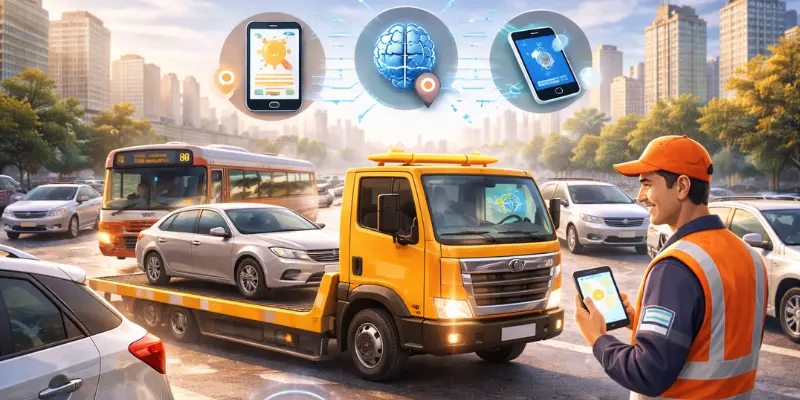
How Technology Is Transforming the Towing Industry in India
A vehicle breakdown used to mean uncertainty who to call, how long it would take, and how much it would cost. In India’s congested cities and long highways, that uncertainty often turned stressful situations into chaotic ones.
Today, the towing industry is undergoing a quiet but powerful transformation. Technology is converting a once fragmented, informal service into a structured, transparent, and customer-focused ecosystem. What’s changing is not just speed or pricing but trust.
From Manual Chaos to Connected Systems: A New Towing Reality
Earlier, towing operations depended on local contacts, verbal commitments, and manual coordination. There was no visibility into truck locations, no standard pricing logic, and limited accountability.
Technology has redefined this workflow. Modern towing is now built on real-time data, automation, and digital communication creating predictability where uncertainty once ruled.
This evolution is especially visible in metros like Mumbai, where traffic density demands precision rather than guesswork.
India’s Digital Shift in Roadside Assistance
India’s rapid adoption of smartphones, UPI payments, and app-based services has set new expectations—even during emergencies. Vehicle owners now expect roadside assistance to be as seamless as booking a cab.
This shift has encouraged towing operators to adopt:
- Location-based dispatching
- Digital service requests
- Automated billing
- Live customer updates
The result is a more organized towing ecosystem that benefits both customers and service providers.
GPS & Real-Time Fleet Tracking: Ending the “On the Way” Guesswork
GPS technology has fundamentally changed towing operations.
Instead of relying on phone calls and assumptions, fleet managers can now see:
- Exact tow truck locations
- Live traffic conditions
- Estimated arrival times
- Route efficiency
For customers stranded on busy roads, this visibility reduces anxiety. For operators, it improves fuel efficiency, reduces idle time, and allows better workload distribution across trucks.
Mobile Apps & On-Demand Towing Platforms
On-demand towing platforms have simplified how help is requested.
Rather than calling multiple numbers, users can raise a towing request digitally, share their live location, and receive confirmation instantly. These platforms also help standardize service quality something that was difficult in the earlier unorganized model.
This app-driven approach has been a major step in professionalizing the towing industry.
AI-Driven Dispatch: Smarter Decisions in Real Time
Artificial intelligence is now handling what used to be manual decision-making.
AI-powered systems analyze distance, traffic congestion, vehicle type, truck compatibility, and urgency before assigning a tow truck. This ensures the most suitable resource reaches the customer not just the nearest one.
In dense cities, this intelligent allocation significantly cuts response times and prevents service bottlenecks.
Digital Payments & Automated Billing: Building Price Transparency
One of the biggest pain points in towing has always been pricing disputes.
Technology is solving this by enabling:
- Pre-service cost estimation
- Distance-based pricing logic
- Digital invoices
- UPI and card payments
Automated billing brings clarity and fairness protecting customers from overcharging and operators from delayed or disputed payments.
WhatsApp Automation: Human Comfort Meets Smart Communication
In India, WhatsApp has become the preferred communication channel even in emergencies.
Towing companies now use WhatsApp automation to:
- Confirm service requests
- Share driver and vehicle details
- Send live location links
- Deliver invoices and updates
This approach feels personal to customers while remaining efficient and scalable for operators.
IoT & Smart Tow Trucks: Technology Inside the Vehicle
The transformation isn’t limited to software alone.
Modern tow trucks are increasingly equipped with IoT systems that monitor load balance, equipment health, and operational safety. This is especially important as India sees rising adoption of electric and premium vehicles that require careful handling.
Smart hardware ensures safer towing and reduces the risk of secondary damage.
Safety Technologies: Accountability on the Road
Dashcams, CCTV systems, and time-stamped service logs are becoming standard tools.
These technologies protect:
- Customers from mishandling
- Drivers from false claims
- Companies from legal disputes
Safety tech adds a layer of trust that was previously missing in roadside operations.
How TowMe Is Bringing This Transformation to Life
While many towing services are adopting technology in parts, TowMe is working to bring all these elements together into a single, integrated ecosystem.
TowMe’s approach focuses on connecting vehicle owners with verified tow truck operators through a technology-first platform. By combining GPS-based truck discovery, smart dispatching, digital communication, and transparent pricing logic, TowMe aims to remove friction from roadside assistance.
What sets TowMe apart is its focus on real-world Indian conditions traffic congestion, varied vehicle types, and the need for instant, reliable communication. The platform is designed not just to dispatch tow trucks, but to create accountability across the entire service journey from request to resolution.
In many ways, TowMe reflects where the Indian towing industry is headed: structured, data-driven, and customer-centric.
What the Future Holds for India’s Towing Industry
The next phase of growth will see deeper integration between towing platforms, insurance providers, EV manufacturers, and traffic authorities. Predictive breakdown alerts, EV-specific towing solutions, and city-level roadside assistance networks are already on the horizon.
Technology will continue to shift towing from a reactive service to a proactive mobility support system.
Technology Is Redefining Trust on the Road
The towing industry is no longer just about moving broken vehicles. It is about restoring confidence during stressful moments.
Technology when applied thoughtfully creates speed, transparency, and accountability. Platforms like TowMe demonstrate how digital tools can solve real-world roadside problems, especially in complex urban environments like Mumbai.
For vehicle owners and travellers, this transformation means one thing: help that arrives faster, communicates better, and charges fairly.