
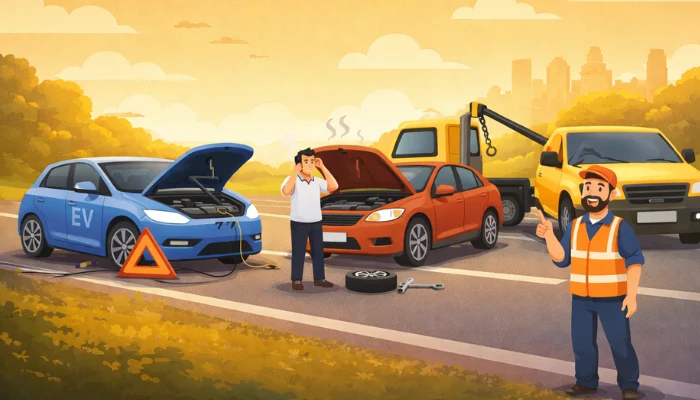
End-of-Year Review – Most Common Roadside Incidents of 2025 in India
If 2025 taught Indian drivers one thing, it’s this: the road is still full of surprises—and not the good kind. From silent EV battery failures to classic tyre blowouts on expressways, roadside incidents continued to test the patience, preparedness, and safety awareness of vehicle owners across the country.
This end-of-year review looks back at the most common roadside incidents in India in 2025, why they happened, what patterns emerged, and what drivers can realistically do to avoid becoming part of next year’s statistics. Whether you drive daily in the city or travel long distances on highways, this guide is designed to be practical, relatable, and genuinely useful.
Overview: What Counts as a Roadside Incident?
A roadside incident refers to any unexpected vehicle-related issue that forces a driver to stop on the road and seek assistance. In India, these incidents range from minor inconveniences to serious safety hazards.
In 2025, roadside assistance providers, highway patrol data, and towing operators reported a noticeable shift in the nature of breakdowns—driven largely by changing vehicle technology, heavier traffic, and extreme weather patterns.
Why This Review Matters for Indian Drivers
Understanding common roadside incidents is not about fear—it’s about preparedness. When you know what usually goes wrong, you can reduce risk, save money, and avoid unsafe situations.
This review helps:
- Vehicle owners anticipate common failures
- Travellers plan safer long-distance trips
- EV users understand new-age breakdown risks
- Families stay safer during highway stops
In short, awareness today prevents panic tomorrow.
The Most Common Roadside Incidents of 2025 in India
1. Tyre Blowouts and Punctures Still Top the List
Despite better roads and newer vehicles, tyre-related issues remained the number one roadside problem in 2025. High-speed expressways, overloaded vehicles, and under-inflated tyres were the usual culprits.
Summer heat made matters worse, especially in states like Maharashtra, Rajasthan, Telangana, and Gujarat, where road temperatures soar. Many drivers still ignore tyre age and tread depth, assuming “they look fine”—until they don’t.
2. Battery Failures: Not Just an Old-Car Problem Anymore
Battery-related breakdowns saw a sharp rise in 2025. Interestingly, this wasn’t limited to old vehicles.
In petrol and diesel cars, frequent short trips, heavy accessory usage, and poor battery maintenance caused sudden failures. In electric vehicles, 12V auxiliary battery failures emerged as a silent but common issue—often leaving EVs completely unresponsive.
3. Overheating Engines During Long Drives
Engine overheating made a comeback in 2025, especially during summer road trips. Low coolant levels, radiator issues, and neglected servicing were key reasons.
Many drivers still rely on warning lights instead of preventive checks, stopping only after steam starts rising—by which point damage is often already done.
4. Fuel Miscalculations on Highways
Running out of fuel may sound avoidable, yet it remained surprisingly common. Long stretches of highways with limited fuel stations, overconfidence in “range remaining,” and inaccurate fuel gauges led to frequent roadside stops.
EV range anxiety also played a role, particularly in areas with sparse charging infrastructure.
5. EV-Specific Breakdowns Gained Visibility
2025 marked a turning point where electric vehicle towing and roadside assistance became mainstream topics. Common EV roadside incidents included:
- Complete battery drain due to poor route planning
- Charging gun compatibility issues
- Software glitches freezing vehicle systems
Many EV owners assumed towing rules were the same as ICE vehicles—an expensive misconception.
6. Accident-Related Breakdowns in Heavy Traffic Zones
Minor accidents and fender-benders increased significantly in urban congestion zones. These incidents often left vehicles immobilized, blocking traffic and creating safety risks.
Inadequate hazard signaling and unsafe stopping practices made these situations more dangerous than necessary.
How Roadside Assistance Typically Works in India
When a roadside incident occurs, the process usually follows a predictable pattern. First, the driver secures the vehicle and contacts roadside assistance or a towing service. The operator assesses the issue remotely, dispatches help, and either fixes the problem on-site or tows the vehicle to a service center.
In 2025, response times improved in metro cities but remained inconsistent on highways and rural routes—highlighting the importance of preparation before travel.
A Typical 2025 Breakdown Scenario
A family travelling from Mumbai to Goa in May experienced a sudden tyre blowout on the highway. With no spare tyre in usable condition and limited roadside signage, they waited over an hour for assistance. The delay wasn’t due to lack of services—it was because the exact location couldn’t be shared accurately.
This scenario played out thousands of times across India in 2025, reinforcing one lesson: breakdowns are manageable, confusion is not.
Common Myths That Made Breakdowns Worse
One persistent myth is that new cars don’t break down. In reality, modern vehicles have more electronics, which means more potential failure points.
Another misconception is that EVs don’t need roadside assistance. While they have fewer moving parts, EVs introduce entirely new breakdown scenarios that drivers must understand.
Expert Tips to Avoid Becoming a 2026 Statistic
Regular vehicle checks before long drives remain the simplest and most effective preventive step. Understanding your vehicle’s warning signs—rather than ignoring them—can stop small issues from becoming roadside emergencies.
For EV owners, route planning with charging backups is no longer optional. For all drivers, keeping a basic emergency kit and knowing safe stopping practices can dramatically reduce risk during breakdowns.
Prepared Drivers Have Better Journeys
The most common roadside incidents of 2025 in India tell a clear story. Breakdowns haven’t disappeared—they’ve evolved. Vehicles are smarter, roads are faster, but preparedness still makes the biggest difference.
As we move into 2026, the safest drivers won’t be the luckiest ones. They’ll be the ones who learned from 2025 and planned ahead.
If you travel frequently, now is the right time to review your vehicle readiness, roadside assistance options, and emergency habits—before the road tests you unexpectedly.
FAQs
Q: What was the most common roadside incident in India in 2025?
A: Tyre-related issues such as punctures and blowouts were the most frequently reported roadside incidents.
Q: Are electric vehicles more likely to break down on highways?
A: EVs don’t break down more often, but their failures are different and require specific towing and handling methods.
Q: Does roadside assistance work everywhere in India?
A: Coverage is strong in cities but can be inconsistent on highways and rural routes, making preparation essential.
Q: Can regular servicing really prevent roadside breakdowns?
A: Yes. Most common roadside incidents are linked to neglected maintenance or ignored warning signs.