
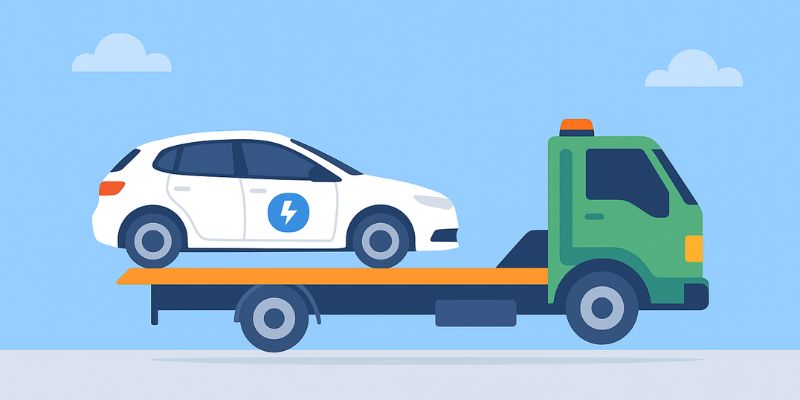
Electric Vehicle Towing Guide – Safety, Tips & Mistakes
Electric vehicles (EVs) continue to grow in popularity, but many owners still aren’t sure how to tow them safely during a breakdown or battery failure. Unlike traditional petrol or diesel cars, EVs have unique components—like regenerative braking systems, high-voltage batteries, and electric motors—that can get damaged if the wrong towing method is used.
This guide breaks down everything you need to know about EV towing, safe towing methods for electric cars, common mistakes to avoid, and what to do during an EV roadside emergency.
Understanding Why EV Towing Is Different
Electric vehicles are built with sensitive electrical components that react differently when the wheels spin. When an EV is towed incorrectly—especially with wheels on the ground—the electric motor and regenerative system may activate unintentionally, leading to costly internal damage.
Key EV components affected during towing
- High-voltage battery pack
- Electric motor
- Regenerative braking system
- Onboard electronics and sensors
- Thermal management system
Because of this, EV manufacturers provide strict guidelines on how their vehicles should be towed.
Safe Towing Methods for Electric Vehicles
Not all towing methods are suitable for EVs. Here are the safest and most widely recommended options:
1. Flatbed Towing – The Safest Method for EVs
Flatbed towing is the standard, manufacturer-approved method for electric vehicles.
Why flatbed towing is recommended
- All four wheels remain lifted off the ground
- No risk of motor or battery activation
- Highly stable and safe for long-distance towing
- Prevents wear on the drivetrain
When to use flatbed towing
- Battery completely drained
- Accident situations
- Motor or electronic faults
- EV won’t start or shift into neutral
Whether you drive a Tata Tiago EV, MG ZS EV, BYD Atto 3, Hyundai Ioniq 5, or any Tesla model—flatbed towing is always the safest choice.
2. Wheel-Lift Towing (Only in Rare Cases)
Wheel-lift towing can be used only if the manufacturer allows it and only when:
- The non-drive wheels remain on the ground
- The EV can be shifted into neutral
- The vehicle is lifted from the correct end
For most EVs, this method is not recommended because wheels turning on the ground may activate the motor.
3. Emergency Transport Using Dollies
Tow dollies lift two wheels completely off the road, allowing safe short-distance movement.
Best used when:
- Flatbed is unavailable immediately
- EV is blocking traffic
- Required to move the car a few meters
This method is a temporary solution—not ideal for long-distance towing.
Common Towing Mistakes That Can Damage an Electric Vehicle
Many EV owners unknowingly allow unsafe towing practices. Here are mistakes to avoid at all costs:
1. Never Tow an EV With All Wheels on the Road
This includes:
- Hook & chain towing
- Traditional rope pulling
- Rear-wheel or front-wheel ground towing
Reason:
It can cause:
- Motor over-rotation
- Regenerative braking damage
- Battery overheating
2. Never Jumpstart Tow an EV
Using another vehicle to push-start an EV does not work and can damage internal electronics.
3. Avoid Dragging a Dead EV Out of Parking
If the EV is in Park and with no power, dragging it can damage the parking mechanism and drivetrain.
Always request a tow truck with skates or dollies.
4. Ignoring Manufacturer Towing Instructions
Every EV brand has its guidelines.
For example:
- Tata Nexon EV prohibits towing with wheels on the ground
- Tesla recommends transport mode + flatbed only
- Hyundai/MG allow short-distance wheel-lift towing only in emergency cases
Always check the manual before allowing the operator to tow.
How to Prepare Your EV for Safe Towing
If your electric vehicle breaks down, follow these steps before the tow truck arrives:
1. Shift the EV into Tow Mode / Transport Mode
This disengages:
- Parking pawl
- Regeneration system
- Electronic parking brake (if applicable)
2. Turn Off the Vehicle Safely
Make sure all electronics are powered down before towing.
3. Inform the Towing Operator It’s an EV
Many towing mistakes happen because the operator isn’t told in advance.
4. Stay Nearby During Loading
Ensure the car is:
- Pulled onto a flatbed using the correct tow hook point
- Secured with straps
- Not dragged or forced
5. Avoid Standing Behind the Vehicle
For safety during winching and lifting.
When Should You Call for EV Towing?
Electric vehicle towing is needed in situations like:
- Battery drained to 0%
- EV won’t start or charge
- Motor or inverter malfunction
- Accident or tyre burst
- Software or sensor failure
- Overheating warning on the dashboard
EVs rely heavily on electronics, so even a small error may require towing instead of driving.
Expert Tips to Protect Your EV During Towing
Always choose a specialized EV towing service
EVs require trained operators who understand high-voltage safety.
Keep a portable EV charger or emergency charging device
This can help avoid towing in minor situations.
Install a GPS-enabled emergency assist app
Some brands give priority service for EV breakdowns.
Regularly inspect tyres and battery health
Many breakdowns happen from poor maintenance.
Save your manufacturer’s roadside assistance number
Most EVs come with specialized assistance plans.
EV Towing Is Safe When Done the Right Way
Towing an electric vehicle isn’t complicated—you just need the right method and a trained operator. Flatbed towing remains the safest option for almost every EV, ensuring the battery, motor, and internal electronics stay protected.
Whether you’re an EV owner or a frequent traveller, understanding these towing basics can save you from expensive mistakes and unnecessary stress on the road.
FAQs
Q1: Can you tow an electric car with the wheels on the ground?
No. Most EVs should never be towed with wheels touching the ground because it can damage the motor and regenerative system.
Q2: What is the safest towing method for electric vehicles?
Flatbed towing is the safest and manufacturer-recommended method for almost all EVs.
Q3: Can an EV be pushed or pull-started like regular cars?
No. EVs cannot be push-started and doing so may damage internal electronics.
Q4: Do towing companies need special training for EVs?
Yes. EV towing requires knowledge of high-voltage systems, correct loading points, and safe handling.
Q5: What should I do if my EV battery dies completely?
Shift to transport/tow mode (if possible), call EV roadside assistance, and request a flatbed tow truck.