
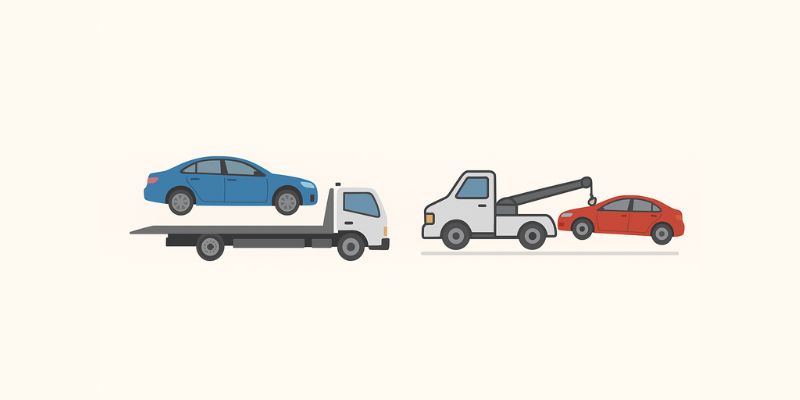
Flatbed Towing vs Hook & Chain Towing – Which Is Safer for Your Vehicle?
When your car breaks down or gets into an accident, the first thing that comes to mind is getting it towed safely. But have you ever wondered which towing method is safer — flatbed towing or hook and chain towing? Both methods serve the same purpose, yet they differ significantly in terms of safety, vehicle protection, and efficiency.
In this article, we’ll break down the differences, benefits, and expert recommendations to help you make an informed decision.
Understanding Flatbed and Hook & Chain Towing
What Is Flatbed Towing?
Flatbed towing involves loading the entire vehicle onto a flat, horizontal platform. The flatbed truck uses a hydraulic system to lift and secure the vehicle, keeping all four wheels off the ground.
This method is especially popular for luxury cars, SUVs, motorcycles, and vehicles with low ground clearance.
What Is Hook & Chain Towing?
Hook and chain towing is the traditional method where the tow truck uses hooks and chains to lift either the front or rear wheels of a vehicle off the ground while the other set rolls on the road.
It’s typically used for junk cars, wrecked vehicles, or cars being transported short distances.
Importance of Choosing the Right Towing Method
Selecting the correct towing method can make the difference between a safe, smooth transport and expensive vehicle damage. Using the wrong towing technique can lead to:
- Scratches or dents in your car’s body
- Transmission or drivetrain damage
- Uneven tire wear or misalignment
That’s why understanding how each towing type works and where it’s best used is crucial for every vehicle owner.
Flatbed vs Hook & Chain Towing
|
Feature |
Flatbed Towing |
Hook & Chain Towing |
|
Vehicle Safety |
Extremely safe — no contact with the road |
Moderate — risk of body or tire damage |
|
Ideal For |
Luxury, sports, or damaged vehicles |
Old, junk, or non-running vehicles |
|
Speed & Convenience |
Quick and smooth loading |
Slower and requires precision |
|
Damage Risk |
Minimal |
High (especially to bumpers and transmissions) |
|
Cost |
Slightly higher |
Usually cheaper |
|
Road Stability |
Very stable |
Less stable, especially on rough terrain |
How Flatbed and Hook & Chain Towing Work
Flatbed Towing Process
- The flatbed is tilted and lowered using hydraulic power.
- The vehicle is carefully winched onto the platform.
- Once loaded, the bed is leveled, and the car is secured with straps or wheel nets.
- The tow truck then transports the vehicle safely with no tire contact on the road.
Hook & Chain Towing Process
- Hooks and chains are attached to the car’s frame or axle.
- The truck lifts one end of the vehicle.
- The other set of wheels remains on the ground during transport.
- This can cause friction, vibration, or transmission wear — especially in automatic or 4WD vehicles.
Common Myths About Towing Methods
- Myth 1: “Hook & chain towing is just as safe as flatbed towing.”
Fact: Hook & chain towing can cause scratches or frame stress, especially in newer cars. - Myth 2: “Flatbed towing is only for expensive cars.”
Fact: Flatbed towing is recommended for any car that needs full protection, regardless of type. - Myth 3: “Flatbed towing always costs more.”
Fact: While it can be slightly costlier, the difference is minimal compared to the potential repair costs of damaged vehicles.
Choosing the Safer Option
- Always opt for flatbed towing if your vehicle is new, automatic, or has low ground clearance.
- Avoid hook & chain towing for four-wheel-drive or luxury vehicles.
- Confirm that your towing provider uses soft straps instead of metal chains to prevent scratches.
- In emergency towing, ask the operator which method they recommend based on your car’s model and condition.
Real-World Example
A Mumbai-based car owner once used hook & chain towing for a sedan after a breakdown. The metal chain scratched the bumper and damaged the transmission due to rear-wheel drag. Later, the same owner switched to flatbed towing, finding it much smoother and damage-free — a clear sign of which method ensures safety and peace of mind.
Which Towing Method Is Safer?
If safety, protection, and peace of mind are your priorities, flatbed towing wins hands down.
Although hook & chain towing may seem cheaper, it’s best suited only for scrap or non-operational vehicles.
So next time you’re stranded, call a professional towing company that offers flatbed towing services to ensure your vehicle stays safe from start to finish.
FAQs
Q1: Is flatbed towing suitable for all vehicles?
Yes, flatbed towing works for almost all vehicles, especially luxury cars, 4WDs, and low-clearance models.
Q2: Does hook & chain towing damage my car?
It can. The metal chains may cause scratches or stress on the frame, especially if not handled properly.
Q3: Which towing method is cheaper?
Hook & chain towing usually costs less but may lead to expensive repairs later. Flatbed towing offers better long-term value.
Q4: How can I ensure my vehicle is towed safely?
Always verify that the towing company uses modern flatbed trucks and follows secure strapping procedures.