
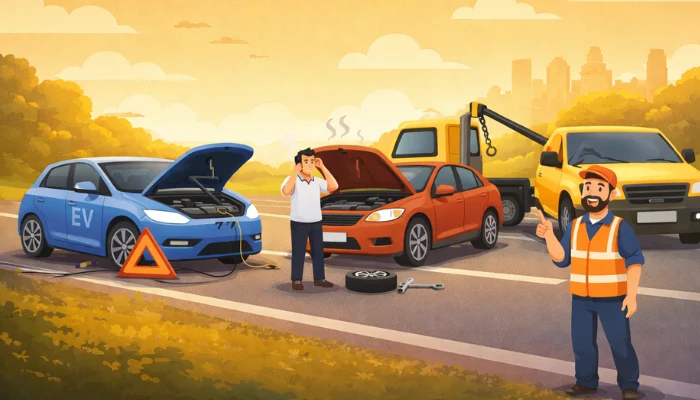
Electric Vehicle Towing: Special Requirements for EV Breakdowns
Electric Vehicle Towing: Essential Safety Rules You Must Know
Electric vehicle towing is very different from towing conventional petrol or diesel cars. As electric vehicles become common on highways and city roads, breakdown situations are increasing too. Unfortunately, many EV owners still assume that towing an electric car is the same as towing a regular vehicle which is a costly mistake.
Understanding electric vehicle towing requirements is essential for protecting your EV’s motor, battery, and electronics during roadside emergencies.
What Is Electric Vehicle Towing?
Electric vehicle towing refers to safely transporting an electric car using approved towing methods that prevent damage to the electric drivetrain and high-voltage battery system. Unlike ICE vehicles, EVs rely on electric motors connected directly to the wheels, which makes improper towing risky.
Why Electric Vehicle Towing Is Different
1. High-Voltage Battery System
EV batteries operate at extremely high voltage. Incorrect towing can cause electrical faults or overheating.
2. Regenerative Braking Damage Risk
When EV wheels rotate during towing, regenerative braking can generate electricity and send it back into the system potentially damaging inverters and motors.
3. No Traditional Neutral Mode
Many EVs lack a mechanical neutral gear, making flat towing unsafe.
4. Heavy Vehicle Weight
Battery packs significantly increase vehicle weight, requiring reinforced towing equipment.
Recommended Electric Vehicle Towing Methods
Flatbed Towing (Best Option)
- All wheels off the ground
- No drivetrain movement
- Manufacturer-approved for most EVs
Wheel-Lift Towing (Limited Use)
- Only allowed when drive wheels are lifted
- Model-specific approval required
Flat Towing
- Strongly discouraged for electric vehicles
Step-by-Step Electric Vehicle Towing Process
- Identify the EV model and towing guidelines
- Power off the vehicle completely
- Activate transport or tow mode if available
- Load the vehicle onto a flatbed tow truck
- Secure using battery-safe straps
- Transport to service center or charging facility
Common Myths About Electric Vehicle Towing
- Myth: EVs can be towed short distances safely
- Reality: Even short towing can damage motors
- Myth: Any tow truck can handle EVs
- Reality: EV towing requires trained operators
Expert Tips for EV Owners
- Always keep your EV manufacturer’s towing instructions handy
- Save contacts of EV-trained roadside assistance providers
- Inform the towing operator clearly that your vehicle is electric
- Never allow wheels to rotate unless approved
Benefits of Professional Electric Vehicle Towing
- Prevents battery and motor damage
- Reduces repair costs
- Maintains warranty compliance
- Ensures electrical safety
Frequently Asked Questions (SEO-Optimized)
Q1. Can electric vehicle towing damage the battery?
Yes, improper towing can cause battery and drivetrain damage.
Q2. Is flatbed towing mandatory for electric vehicles?
Flatbed towing is recommended for most EV models.
Q3. Are EV towing services different from regular towing?
Yes, they use specialized equipment and trained staff.
Conclusion
Electric vehicle towing is not just a service it’s a safety requirement. Knowing the correct towing method can protect your EV from irreversible damage and unexpected repair costs. Always choose trained professionals and approved towing methods.
👉 If you drive an EV, make electric vehicle towing safety part of your travel preparation.