
What to Keep in Your Car Emergency Kit
Most people don’t think about a car emergency kit while driving comfortably with music on and AC running. The thought usually comes later—when the car refuses to start, it’s raining, the phone battery is dropping, and help is farther away than expected.
A car emergency kit isn’t about fear or overthinking. It’s about being ready for those awkward, uncomfortable moments on the road when things don’t go as planned.
This guide explains what you should realistically keep in your car emergency kit, why each item matters, and how EV owners and travellers can prepare a little smarter.
What a Car Emergency Kit Really Is
A car emergency kit is not a complicated setup. It’s simply a small collection of essentials that help you stay safe, visible, and calm while waiting for help or handling a minor roadside issue yourself.
It’s not meant to fix your car completely. It’s meant to buy you time, protect you from risk, and make an inconvenient situation manageable instead of stressful.
Why Emergency Kits Matter More Than Ever
Modern cars are more advanced, but they are also more dependent on electronics, batteries, and sensors. A small failure can stop the vehicle entirely. For electric vehicle owners, a drained battery or 12V system issue can leave the car immobile without warning.
Emergency kits matter because breakdowns rarely happen at the “right” time. They happen at night, during bad weather, on highways, or in unfamiliar areas. When that happens, being prepared gives you control over the situation instead of panic.
The Most Important Things to Carry
Staying Visible and Safe Comes First
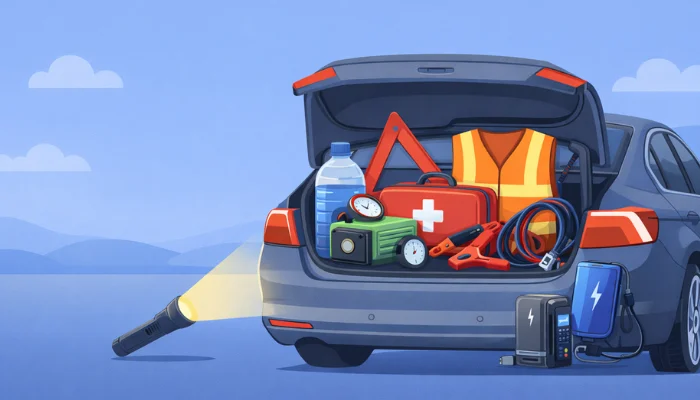
When your car stops unexpectedly, your first concern isn’t fixing it—it’s being seen. Other drivers need to notice you early, especially on highways or in low-light conditions. A reflective warning triangle placed at a safe distance and a high-visibility vest can significantly reduce the risk of accidents. A good torch or rechargeable flashlight becomes essential once the sun goes down or during heavy rain.
These items don’t take space, but they protect lives.
Power and Charging: The Real Lifeline
In most roadside situations, the phone becomes your lifeline. Navigation, calls, payments, and emergency assistance all depend on it. A fully charged power bank and a reliable car charger ensure you’re never cut off.
For EV owners, power becomes even more important. Carrying your vehicle’s charging cable, and if possible a portable charger for highway travel, can save hours. Many EV breakdowns are linked to the auxiliary 12V battery, so a compact jump starter can be surprisingly useful.
Basic Vehicle Tools That Actually Help
You don’t need a full toolbox, but a few essentials make a big difference. A tyre inflator or spare tyre helps in the most common roadside problem—punctures. A basic toolkit allows you or a professional to handle small adjustments. Even if you don’t use these tools yourself, having them available speeds things up when help arrives.
First Aid and Personal Care
Minor cuts, headaches, or stress-related discomfort feel worse during emergencies. A basic first aid kit, along with personal medicines, hand sanitizer, and wipes, keeps things under control. These items are especially important when travelling with family, elderly passengers, or children.
Comfort Items That Reduce Stress
Breakdowns often involve waiting. Water, light snacks, and a small blanket or shawl can make a long wait far more tolerable, especially during extreme heat, cold nights, or traffic jams. These aren’t luxuries—they help you stay focused and calm.
Extra Preparation for Frequent Travellers
If you travel long distances regularly, a few additional items can be helpful. A rain poncho keeps you dry during sudden showers. Duct tape solves more temporary problems than most people expect. A printed list of emergency contacts is useful when phones fail or batteries die.
These small additions cost little but add real value on the road.
Mistakes People Commonly Make
Many people buy an emergency kit once and never check it again. Power banks stay uncharged, medicines expire, and items get buried under luggage. Others forget to adapt their kit when switching to an EV or travelling longer distances.
An emergency kit that isn’t maintained is almost as bad as not having one.
How to Keep Your Emergency Kit Useful
Checking your emergency kit every few months is enough. Recharge electronics, replace expired items, and make sure everything is stored neatly in one bag. Most importantly, ensure you can access it quickly without unloading half the boot.
Preparation should be simple, not a chore. And for any emergency breakdown situation call TowMe.
Calm Is the Real Emergency Tool
A car emergency kit doesn’t guarantee that nothing will go wrong. What it does guarantee is that you won’t feel helpless when something does.
Prepared drivers make better decisions, stay safer, and handle breakdowns with confidence instead of panic.
FAQs
What is the most important item in a car emergency kit?
Visibility tools and a reliable power source are the most critical during breakdowns.
Do electric vehicles need a different emergency kit?
Yes. EV owners should include charging cables, power banks, and a 12V jump starter.
How often should an emergency kit be checked?
Every six months or before any long road trip.
Are ready-made emergency kits enough?
They’re a good start, but customizing them for your vehicle and travel habits works better.
Where should the kit be kept in the car?
In the boot, but with easy access to safety and visibility items.